Have we designed ourselves out of caring?

We’re in the age of frictionless living. Modern life is engineered to remove effort. But what’s that doing to our critical thinking and ability to engage in the climate crisis?
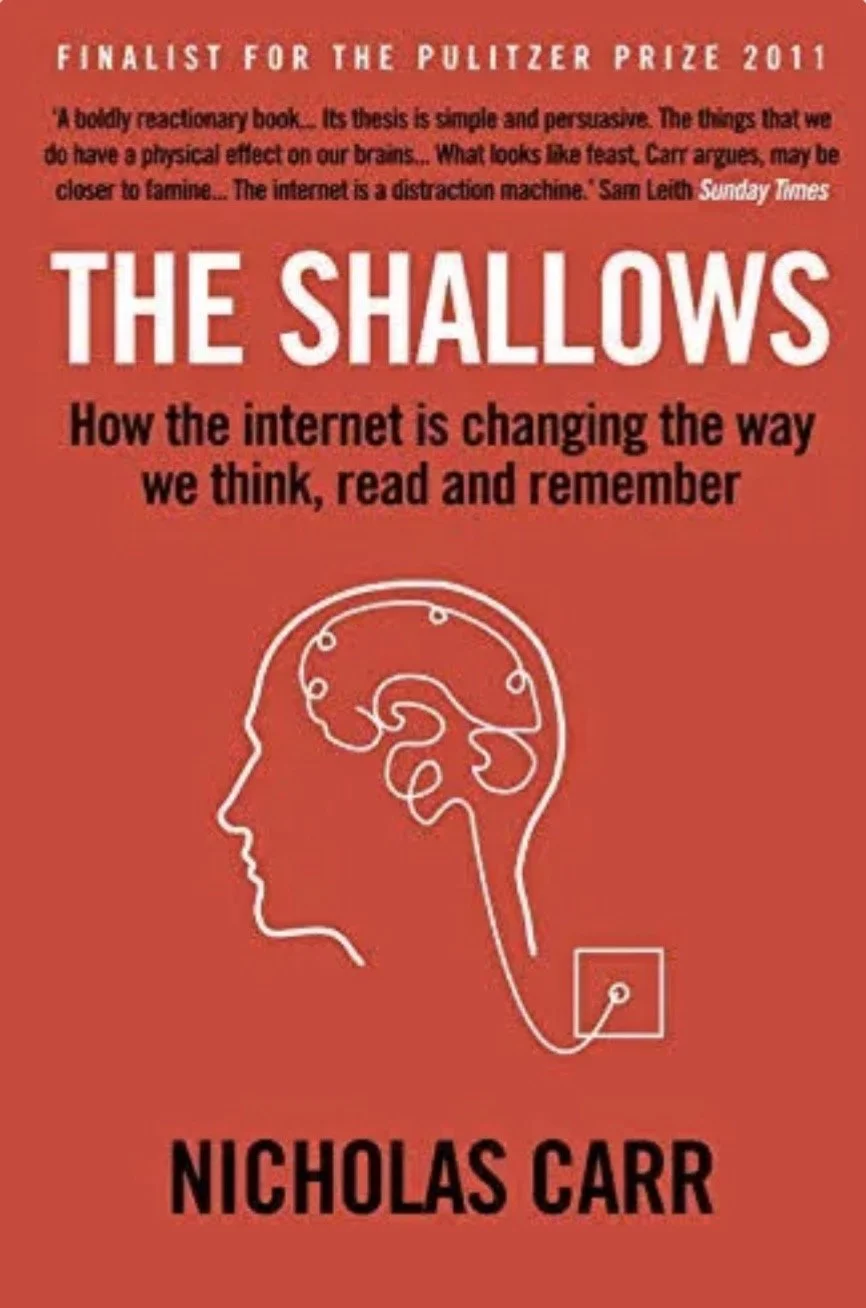
In 2008, the writer Nicholas Carr published an essay in The Atlantic that later became the book The Shallows. His argument was simple but provocative: the internet wasn’t just changing what we read - it was changing how we think. Deep reading was being replaced by skimming. Concentration by scanning. Reflection by reaction.
At the time, it felt like a media debate. 18 years on, it feels like a cultural diagnosis.
When you look at our hesitant relationship with environmental action - the fatigue, the avoidance, the quiet switching off - it’s hard not to see the same pattern. Not a lack of morality, but a diminishing capacity for sustained attention.
We live in what the anthropologist David Graeber might have called an era of engineered ease; a world where friction is treated as failure.
Today, we purchase with one-click. We watch TV on-demand. Order same-day delivery. Food at our door in minutes. Endless scrolling with no natural stopping point.
Convenience is the baseline expectation nowadays, and that convenience quietly reshapes our psychology. It lowers our tolerance for friction, reduces our comfort with delay, and makes effort actually feel like an error in the system.
Environmentalism is full of friction. It asks us to consume less, question habits, pay more (sometimes), research before buying, think long-term, act collectively - for no instant reward or gratification.
When everything else in life has been optimised for ease, environmental responsibility feels disproportionately heavy, which is in itself a huge problem.
Environmental issues are complex systems problems. They require us to hold multiple variables in mind at once; economics, politics, supply chains, behaviour, culture. They require nuance, trade-offs and ambiguity.
The kind of thinking that demands that all important yet increasingly elusive capacity: sustained attention.
The kind of mental muscle that is trained through reading books.
Embracing complexity
Long-form reading builds cognitive stamina, and strengthens our ability to sit with complexity without needing instant resolution. It cultivates empathy and systems thinking.
As sustained focus becomes harder for many of us who are addicted to the fragmented, fast-paced, algorithm-curated content offered through our phones, systemic problems begin to feel even more abstract and unreachable.
If we can’t sit with complexity, after all, we can’t meaningfully engage with it. So we just scroll instead.
The effort–meaning relationship
So how do we bring ourselves back into the kinds of conversations that live in complexity?
It starts with deeper connection.
The environmental writer Robin Wall Kimmerer in Braiding Sweetgrass speaks about reciprocity - the idea that meaningful relationship with the natural world requires participation, not passive consumption.
Effort to engage, to change behaviour, feels less like punishment or sacrifice, and more like being part of a relationship.
Growing food, repairing clothes, reading deeply, organising locally - these actions require time and energy. But they also produce agency, belonging, and purpose.
In a frictionless economy, we outsource effort, and risk outsourcing meaning. But environmentalism calls us back into meaning and participation.
The solution is not guilt, nor abandoning technology. It is rebuilding cognitive and emotional stamina. Reading long-form again. Ensuring the next generation can do this. Sitting with complexity. Accepting effort as meaningful rather than inefficient.
Creating spaces - offline and online - where depth is rewarded.
In The Shallows, Nicholas Carr worried we were losing our ability to concentrate. Perhaps the environmental crisis mirrors back to us what that loss costs.
But attention, like any muscle, can atrophy, or be rebuilt.