Why is it so hard to stop buying clothes?
I don’t need convincing that fast fashion is a problem. I’ve read the reports, quoted the statistics, written the articles.
And yet, several times a month, I still find myself adding things to basket and wasting my precious downtime on fighting that pull to purchase. It’s a force to be reckoned with.
And I know friends of mine do the same.
The stats even circle around my head in most of these moments.
I know the fashion industry is responsible for at least 10% of global carbon emissions - more than international flights and maritime shipping combined. I know that producing a single cotton T-shirt can use 2,700 litres of water - roughly what a person drinks over two and a half years. I know that the average garment is now worn just seven to ten times before it’s discarded.
And still, buying new clothes unnecessarily is one of the hardest habits I’ve ever tried to break.
I stood in front of my wardrobe recently, thinking about how damaging the fashion industry is, while simultaneously feeling the pull of buying a third white top. It’s a strange and uncomfortable gap that exists between what we know and how we behave.
We like to believe that if people truly understood the environmental cost of fast fashion, they would naturally buy less of it. But consumption data tells a different story.
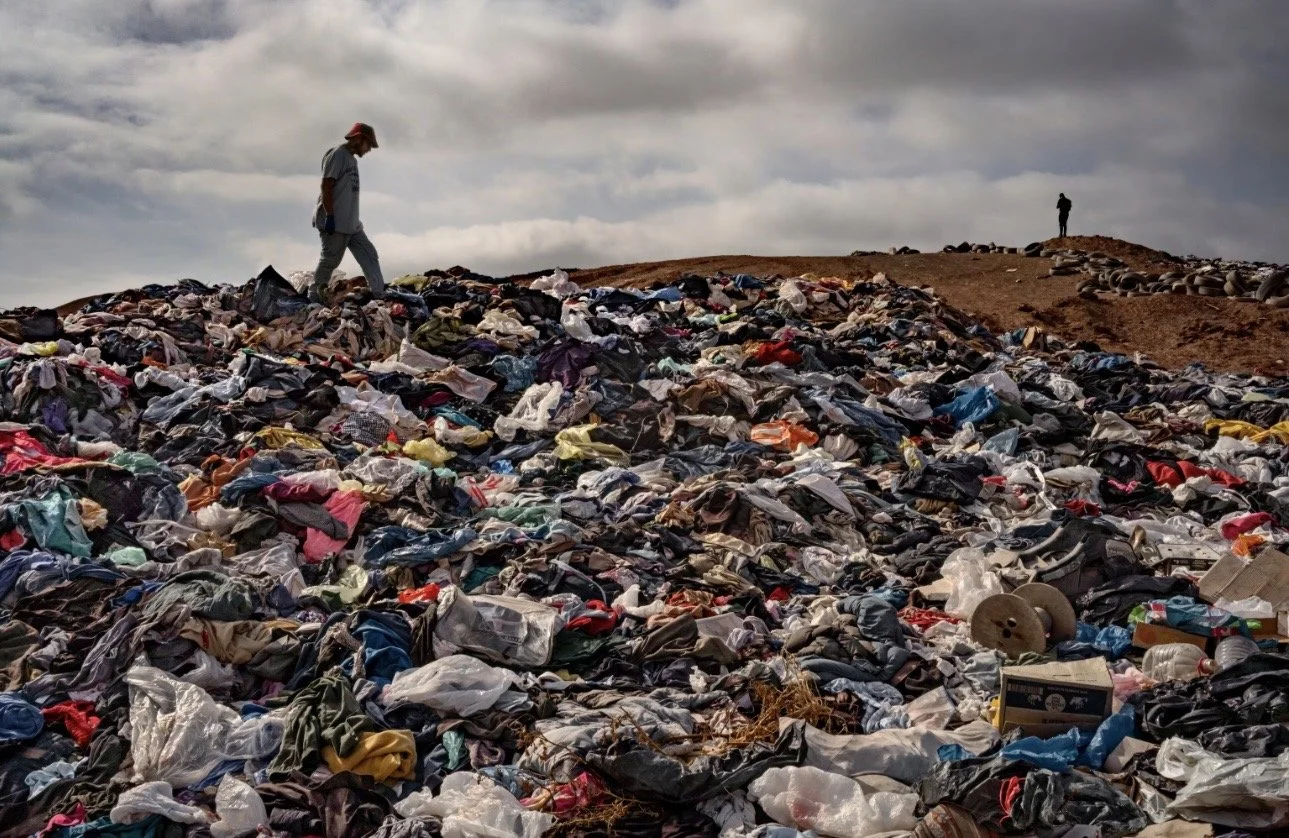
Over the past decade, public awareness of fashion’s environmental impact has risen sharply, while global clothing production has almost doubled since 2000. In the UK, we buy more clothes per person than any other country in Europe.
The problem, it seems, isn’t a lack of information - it’s that information alone doesn’t change behaviour.
Why knowing better doesn’t mean doing better
Psychologists call this gap between values and actions the value–action gap. We see it everywhere - in climate change, diet, exercise, and spending - but fast fashion is one of its most potent examples.
George Marshall has written extensively about this disconnect in the context of climate change. He argues in his groundbreaking 2014 book ‘Don’t Even Think About It: Why Our Brains are Wired to Ignore Climate Change’ that climate change fails as a story for the human brain. It’s distant, abstract, slow-moving and emotionally inconvenient. We are not wired to respond to long-term threats - especially when they conflict with our immediate needs, identities and social norms.
Fast fashion sits neatly inside this psychological blind spot. The harm it causes is diffuse and far away. The reward it offers is immediate. A new item of clothing delivers novelty, identity and a hit of dopamine - right now. The consequences, meanwhile, are outsourced to supply chains, ecosystems, and communities most of us will never see.
Research in consumer psychology shows that people often shop not to acquire things, but to regulate emotions. Buying something new can temporarily reduce anxiety, boredom or low self-esteem. It offers a feeling of progress, reinvention, or control — especially during periods of uncertainty.
In an era defined by economic instability, social comparison and algorithmically amplified dissatisfaction, fashion has become one of the quickest ways to feel momentarily aligned with who we think we should be.
What worries me isn’t just why we keep buying clothes we don’t need, but why this has become one of the easiest ways to feel temporarily ok. Why so much of our emotional regulation is mediated through consumption. And why restraint can often feel like sacrifice.
Being a conscious consumer
When buying fewer clothes is framed as a personal ethical achievement, restraint starts to feel like deprivation. It becomes something you have to constantly perform and maintain. It’s not surprising that people burn out, opt out, or quietly give up.
Psychologists describe this as moral licensing: when doing something “good” gives us subconscious permission to later do something less good. Buy one sustainable item, and it can paradoxically make it easier to justify several unsustainable ones. The system doesn’t change - the guilt just circulates.
Meanwhile, the fashion industry continues to normalise overproduction. Major brands release up to 52 micro-seasons a year. Ultra-fast fashion platforms upload thousands of new styles every day. Advertising and social media constantly reinforce the idea that repeating outfits is a failure of imagination rather than a rational, environmentally sane behaviour.
In that context, stopping requires a lot more than willpower; it requires swimming against cultural norms, emotional habits and commercial pressure all at once.
I’m increasingly convinced that if we want behaviour change at scale, we need to stop pretending that knowledge alone will do the work. We need to understand the psychological, cultural, and structural forces that normalise overconsumption, and make stopping it feel hard.
There is no perfect way to opt out of overconsumption while still living inside a system designed to encourage it. There are a lot of imperfect ways to do it, though - and ways of making the tension more manageable - less driven by guilt, less tied to sacrifice, and more governed by empathy and awareness.
Four practices that can help:
1. Shift the goal from “stopping” to “slowing”
One of the reasons buying fewer clothes feels so hard is that we frame it as abstinence. Stop buying. Cut it out. Go cold turkey.
Behavioural psychology suggests that all-or-nothing thinking is brittle. When people slip - as they inevitably do - they tend to abandon the effort altogether.
Slowing down is different. It creates space between impulse and action. It turns a reflex into a decision. Even small pauses can disrupt automatic behaviour more effectively than rigid rules.
2. Pay attention to when the urge appears
The most useful insight I’ve had isn’t about fabrics or certifications - it’s about timing.
The urge to buy clothes often shows up:
🔸when we want more confidence ahead of an event or to present ourselves a certain way to peers
🔸when we’re being sold an offer via a marketing email or on our social feed
🔸when we’re seeking novelty (as part of boredom or procrastination)
Noticing this doesn’t eliminate the urge, but it reframes it. I try asking, “What feeling am I trying to manage right now?”
3. Replace guilt with friction
Guilt is a poor long-term motivator. It’s emotionally draining and unhelpful. Friction, on the other hand, works like quiet activism.
This might look like:
✔️unsubscribing from marketing emails
✔️deleting shopping apps
✔️avoiding sites that trigger habitual scrolling
✔️putting items in a basket and leaving them there
These aren’t big, bold, moral acts. They’re small behavioural ones. They acknowledge that willpower is limited - and that environments shape behaviour more than intentions do.
4. Widen the frame of responsibility
One quiet relief comes from recognising that your entire moral worth is not contained in your wardrobe.
Individual choices matter, but they exist alongside collective ones: political pressure, cultural norms, workplace influence, conversations, refusal to perform constant novelty. Shifting some attention away from personal consumption and towards shared responsibility can reduce the sense that everything rests on individual restraint.
It doesn’t remove the tension — but it redistributes it more honestly.
We need to accept that caring and still consuming isn’t hypocrisy; it’s a reflection of living inside systems we didn’t design and can’t individually dismantle.
“Acknowledge that willpower is limited - and that environments shape behaviour more than intentions do.”